

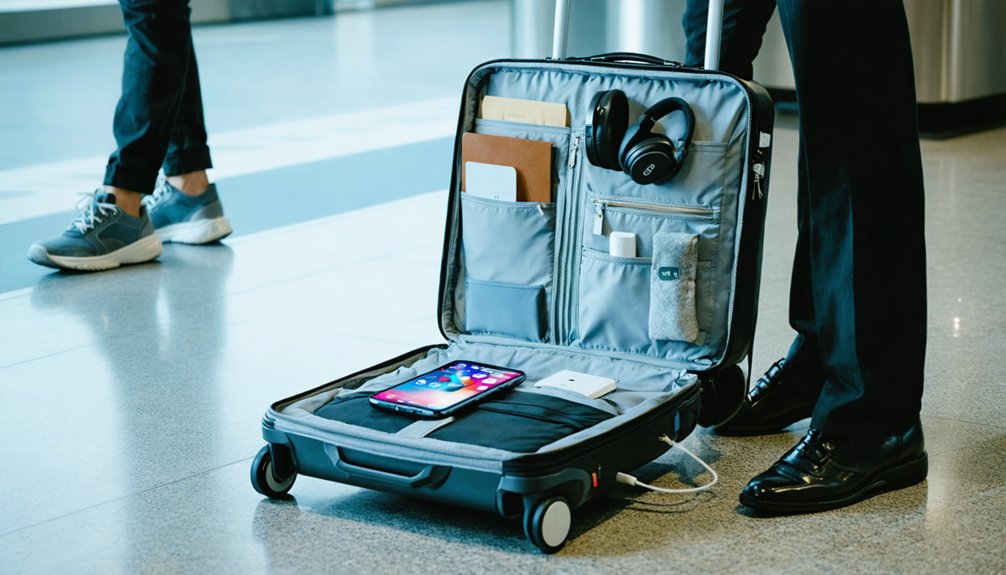

Smart travel gear improves convenience by cutting common hassles before and during a trip. Features such as built-in charging, fold-flat adapters, and power banks keep devices ready without extra cables. GPS and Bluetooth tracking help locate bags quickly, while anti-theft materials, hidden pockets, and RFID-blocking compartments add security. Packing cubes and labeled sections make access faster and reduce clutter. The right setup also matches trip length, activities, and carry-on limits, with practical ways to choose.
Highlights
- Smart chargers, power banks, and built-in cables keep devices powered with less clutter and fewer accessories to pack.
- Packing cubes and labeled compartments organize clothing and essentials, making items easier to find without unpacking everything.
- GPS trackers, Bluetooth pairing, and geofencing help travelers locate bags quickly and receive alerts if luggage goes missing.
- Anti-theft features like lockable zippers, RFID-blocking pockets, and hidden compartments protect valuables while preserving easy access.
- Multi-use accessories, refillable toiletries, and compact tools reduce bulk and simplify packing for different trip types and activities.
What Makes Smart Travel Gear More Convenient?
Smart travel gear becomes more convenient by reducing the small frictions that typically slow a trip down. Practical design explains the appeal: compact chargers attach directly to phones, fold flat, or power two devices at once, limiting cable clutter and outlet competition. A portable power bank with a built-in USB-C cable adds cable-free charging by eliminating the need to pack extra cords while still delivering fast power on the go. Multi-use tools and wallets replace single-purpose accessories, helping travelers pack lighter while keeping essentials close and easy to reach. Refillable toiletries and compact repair items add everyday convenience by helping travelers handle routine needs and unexpected gear issues without searching for replacements on the road. Wireless audio adapters like the AirFly Pro add in-flight convenience by letting travelers use Bluetooth headphones with plane seat-back audio jacks while preserving active noise-cancelling.
Convenience also comes from faster retrieval and setup. Slim trackers fit discreetly into wallets or passports and allow quick pings when items go missing, offering reassurance during busy itineraries. Ergonomic stands, flexible belts, and pocket-sized battery packs improve comfort without adding bulk. Space-efficient slings and universal adapters further streamline movement. Even AI assistants and voice control fit this pattern, minimizing manual steps and helping travelers feel prepared and included.
Smart Luggage Keeps You Connected on the Move
Much of smart luggage’s appeal lies in its ability to keep travelers connected without adding extra devices or steps. Bluetooth leads adoption because it uses little power, pairs easily with phones, and supports anti-theft alerts, smart locking, and proximity notifications in airports and hotels. IATA data shows Bluetooth models represented 42% of smart luggage sales in 2023, reflecting broad mainstream trust. The segment’s strength is reinforced by Bluetooth holding the largest share thanks to low-power integration with smartphones and security features.
Wi‑Fi features extend control through mobile apps, including remote locking, battery monitoring, and overweight notifications, helping frequent flyers stay organized. In 2024, Wi‑Fi accounted for 45.70% of global revenue, making it the leading connectivity feature. Built‑in USB charging ports and power banks further reduce dependence on separate chargers, a category projected at $1,051 million in 2025. App‑controlled functions and proximity sensors add timely updates and tamper alerts. Paired with eco‑friendly materials and modular interiors, these designs fit connected travelers’ expectations. This momentum is supported by the broader smart luggage market’s 16.28% CAGR projected through 2032.
GPS Tracking Helps You Find Bags Faster
How quickly a lost bag can be located often determines whether a delay becomes a minor inconvenience or a major disruption.
GPS-enabled luggage trackers give travelers a real-time smartphone view of where bags are during layovers, aircraft loading, and baggage claim, often cutting recovery from hours to minutes. This real-time visibility helps travelers stay on schedule without circling baggage claim or waiting for announcements.
Using global triangulation from satellite signals, these devices provide wider coverage than airport-limited RFID systems and can continue reporting after arrival. Some versions use both GPS and Bluetooth for layered security across global and local tracking conditions.
Many models also pair with Bluetooth for tighter indoor precision.
Geofencing tools send instant alerts when luggage leaves a designated zone or appears headed to the wrong destination.
Reported cases show families, business travelers, and photographers locating misplaced bags quickly through app data and airline coordination.
With smart luggage demand rising sharply, GPS tracking has become a practical standard for more confident, connected travel. The market is projected to reach USD 6.90 billion by 2032, reflecting rapid growth in connected travel gear.
Anti-Theft Features Add Peace of Mind
Knowing where a bag is solves only part of the problem; preventing theft adds another layer of travel security. Anti-theft gear addresses common risks with slash-resistant fabrics, steel-mesh panels, anti-puncture zippers, and reinforced straps that deter most opportunistic theft in crowded transit settings. The market is projected to grow at a 14.4% CAGR from 2025 to 2032.
Lockable zippers add another safeguard by limiting quick access during distractions, while TSA-compatible locks preserve convenience at checkpoints. RFID-blocking pockets protect cards and passports from digital skimming, especially in dense tourist zones. Hidden compartments further reduce exposure by keeping precious items out of sight and harder to reach. Millennials and Gen Z are accelerating demand for smart security features that blend protection with everyday convenience. Online marketplaces accounted for 41.3% of sales in 2025, showing how travelers increasingly discover and buy anti-theft gear through digital channels.
Market growth reflects the appeal: anti-theft luggage reached USD 4.02 billion in 2023 and continues rising as travelers prioritize peaceful travel and secure comfort. These features help people move through shared spaces with greater confidence and ease together.
Smart Compartments Make Packing Less Stressful
When luggage includes smart compartments such as packing cubes and compression sections, packing becomes more systematic and far less stressful. Travelers gain modularized organization by grouping tops, pants, and essentials into labeled or color‑coded spaces, making contents instantly recognizable. This structure supports stress‑free planning by showing what is packed, limiting overpacking, and keeping clean items separate from worn clothing. Packing cubes also simplify airport checks because TSA inspections can happen without loose items spilling everywhere. National Geographic research suggests that decluttered packing can improve mood and reduce travel stress. Unlike compression bags, packing cubes provide structured compartments that keep items organized instead of simply squeezing them flat.
Compression areas also remove wasted space, helping more fit into carry‑ons while preserving order in corners and gaps. Access improves because one cube can be pulled out without disturbing the rest, reducing frantic searches in airports, hotels, or shared rooms. Practical hygiene benefits add value as shoes and toiletries stay isolated from garments, wrinkles are minimized, and washable cubes help maintain cleaner routines throughout a trip for everyone.
Travel Tech Accessories Simplify Long Trips
Travel tech accessories reduce friction on long trips by keeping essential devices powered, connected, and easy to manage across changing transit conditions.
With 94 percent of adults bringing electronics and averaging three devices per vacation, reliable charging and organization support smoother routines and a stronger sense of readiness.
Usage patterns explain demand. Travelers spend about 90 minutes per trip on personal devices, while smartphones, laptops, cameras, headphones, and tablets remain common.
Compact tools such as universal adapters, GaN chargers, wireless charging sets, power banks, and trackers help maintain access, improve battery sustainability, and support saving travelassistant expectations around efficiency.
Practical protection also matters: padded cases and soft-item cushioning reduce risks, since some travelers report damage, loss, theft, and overhead-bin impact during extended journeys and airport transfers.
How to Choose Smart Travel Gear That Fits Your Trips?
Most smart travel gear works best only when matched to the realities of the trip itself. Selection should begin with trip duration, travel style, and whether the traveler prefers carry‑on mobility or extended packing capacity.
Backpack size, weight, comfort, durability, and smart organization matter most when balancing flexibility with reliability.
Functional clothing choices should support material selection and climate adaptation. Breathable, moisture‑wicking, quick‑drying, and wrinkle‑resistant fabrics increase usefulness across changing conditions, while neutral colors simplify outfit planning.
Packing cubes, mesh bags, compressors, and expandable compartments improve access and space control.
Activity‑specific needs also guide decisions: waterproof protection for water outings, protective camera bags for photography, and proper footwear for hiking.
Over time, travelers refine preferences, building gear systems that feel practical, confident, and naturally aligned with how they travel.
References
- https://www.tsxluggage.com/news/the-ultimate-guide-to-2026-luggage-industry-trends-from-sustainable-design-to-smart-travel-gear/
- https://smartflyer.com/story/2026-travel-trends/
- https://www.smartertravel.com/the-real-rules-for-carry-on-luggage/
- https://www.fortunebusinessinsights.com/smart-luggage-market-104615
- https://www.youtube.com/watch?v=AhbumQ1XZ4o
- https://thegadgetflow.com/blog/ces-2026-travel-tech/
- https://www.packhacker.com/guide/travel-gift-ideas/
- https://www.menshealth.com/technology-gear/g42487333/best-travel-gadgets/
- https://www.carryology.com/liking/buyersguide/15-awesome-long-haul-travel-essentials/
- https://www.moft.us/blogs/news/best-travel-gadgets