

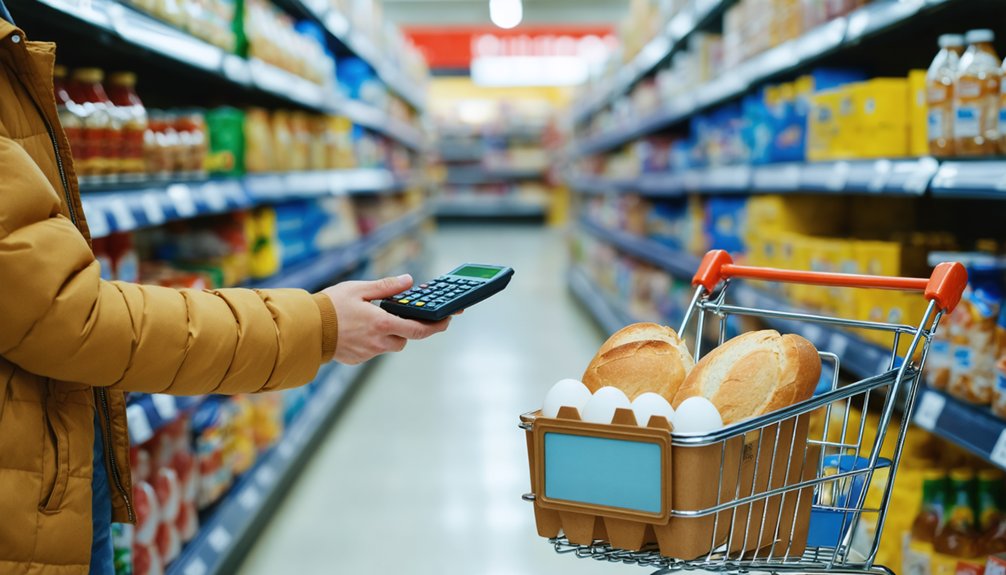

Inflation reshapes daily spending by raising the cost of essentials first. U.S. households now need about $3,500 more than in 2019–2020, while food prices rose 3.1% and many bills, transportation, and housing costs remain elevated. As a result, consumers cut dining out, switch to lower-cost groceries, shop sales, and delay nonessential purchases such as travel, clothing, and entertainment. These patterns show where budgets tighten first and what changes tend to follow next.
Highlights
- Inflation forces households to spend more just to maintain the same lifestyle, with lower-income families hit slightly harder than higher-income families.
- Food prices shape daily inflation perceptions because shoppers see grocery costs often, even when overall inflation rises more slowly.
- Higher restaurant and takeout prices push many consumers to eat at home more and cut dining-out frequency.
- Shoppers respond by choosing generics, using coupons, shopping sales, making lists, and comparing stores for better value.
- Families usually cut nonessential spending first, including dining out, clothing, travel extras, subscriptions, and entertainment.
How Inflation Changes Daily Spending Choices
Inflation reshapes daily spending choices most visibly in how households reallocate limited dollars across essentials and discretionary items. Lower-income households need 7% more spending to maintain prior consumption, versus 6% for higher-income households, while the average U.S. household requires $3,500 more than in 2019–2020. As purchasing power falls, many households tighten budget budgeting practices, reduce non-essentials, and increase credit usage. In 2021, energy prices rose 33.3% year over year, making fuel and utility costs a major driver of daily budget adjustments. Behavior reflects a broad search for control and belonging through shared inflation savings habits.
Globally, over 20% plan to shop less if prices rise sharply; 62% say money feels tighter. Consumers respond with discount hunting: 57% shop sales more, 47% use coupons or lower-cost store brands, and 55% buy fewer non-essential items. Lower-income consumers deplete savings fastest, while higher-income households more often preserve established routines amid persistent price pressure. In global surveys, inflation ranked the top global problem in October 2023, underscoring how strongly rising prices shape everyday spending decisions. Many households also shift toward eating at home, with 67% reporting they do so more often as tighter budgets reshape everyday routines.
Why Food Prices Shape Inflation Decisions
Why do food prices carry such outsized influence over inflation decisions? Food is purchased frequently, noticed immediately, and shared across nearly every household, making it a powerful reference point for consumer sentiment.
In February 2026, overall consumer prices rose 2.4%, while food increased 3.1%, with a 0.4% monthly gain. That gap matters for price budgeting because groceries are routine, visible, and hard to postpone. Food at home prices rose 2.4%, reinforcing how even modest grocery increases can shape everyday spending perceptions. Food-away-from-home prices are projected to rise 3.7% in 2026, adding pressure to dining-out budgets even as grocery inflation remains comparatively moderate. USDA’s 2026 outlook puts grocery prices up just 1.7%, below the long-term average, even though shoppers may still feel food inflation intensely.
Food also displays uneven price elasticity. Households can switch brands or categories, yet staples still anchor spending expectations.
Even with egg prices projected to decline 27.4% in 2026, beef and veal may rise 5.5%, sugar and sweets 6.7%, and beverages 5.2%. These category shifts shape whether people feel inflation is easing, stable, or still pressuring everyday choices and family financial confidence.
How Inflation Affects Eating Out and Takeout
As prices rise on restaurant meals, eating out and takeout become some of the most visible tradeoff decisions in household budgets.
Food away from home increased 4% from January 2025 to January 2026 and 39.3% since January 2019, outpacing grocery inflation across much of the past two years.
Those increases have tested price elasticity, especially among low- and middle-income households, which have reduced quick-service visits, sit-down meals, and delivery orders.
Economic pressure also pushes many diners toward trading down within their preferred restaurants instead of switching to cheaper chains.
Four in ten U.S. consumers cut restaurant frequency in 2025, underscoring the broad impact of reduced visits.
Industry forecasts still project 1.3% real growth in restaurant sales for 2026, even as uneven traffic and higher costs continue to pressure operators.
Gen X and baby boomers showed some of the sharpest pullbacks, while higher-income diners remained less sensitive.
In response, operators raised prices but also leaned on promotions, value bundles, and menu redesign to preserve traffic.
For many households, restaurant spending now depends less on habit and more on whether a meal still feels worth sharing, affordable, and part of normal social life.
How Inflation Changes Grocery Shopping Habits
For many households, grocery shopping has become one of the clearest places where rising prices reshape daily behavior. Grocery costs now rank among consumers’ top concerns: 30% monitor prices more closely, 52% spend more on food than last year, and 49% say affording food is at least somewhat difficult. Shoppers report the sharpest increases in dairy, meat, and produce. Older adults, especially those 50-plus, report feeling greater affordability pressure than younger shoppers. Because food is purchased so often, consumers tend to view it as a key signal of overall inflation.
These pressures reveal price elasticity in everyday choices. Nearly 90% have adjusted habits, often by reducing splurges, limiting waste, choosing generics, making lists, and timing purchases around coupons or sales. Households also make 222 grocery trips annually, reflecting more comparison shopping, while 16% visit multiple stores for better value. Many are also shifting purchases to mass, club, and online retailers in search of lower prices. Brand switching has become common, with 49% buying lower-cost options more often, reinforcing a shared move toward practical, community-minded spending norms.
How Inflation Affects Bills, Housing, and Utilities
How sharply inflation reshapes household budgets becomes especially visible in housing, utility bills, and other fixed monthly costs.
National home prices are expected to stall near 0% in 2026, with modest gains of roughly 2.2% still trailing inflation above 3%, leaving real prices slightly lower for a second year. Inventory levels are also running about 20% above last year, creating some inventory relief for buyers.
For consumers, relief remains limited. Fixed mortgage rates near 6.3% keep monthly payments high, although affordability may improve modestly as incomes rise and payments edge down for the first time since 2020. In many markets, mortgage payments still consume more than 30% to 35% of household income, a clear sign of financial strain.
Regional differences matter: the Northeast and Midwest face tighter supply and firmer prices, while parts of the South and West see softer markets from added construction.
At the same time, rental costs and utility tariffs can rise with broader inflation, pressuring households seeking financial stability and community confidence. Housing also carries broad economic weight, accounting for roughly 15-18% of U.S. GDP through residential investment and housing services, underscoring its macro impact on daily budgets.
How Inflation Changes Travel and Leisure Spending
Pressure from inflation extends beyond monthly bills into the choices households make about vacations, weekend trips, and entertainment.
In February 2026, airline fares increased 7.1% year over year, while local transportation rose 5.1%, making mobility a leading pressure point in travel spending. Consumers increasingly watch fare forecasts and book earlier to protect a household budget.
At the same time, hotel prices declined 2.2% from a year earlier, offering rare relief within travel budgeting, even as cumulative lodging costs remain raised versus 2021.
Food away from home climbed 3.9%, and entertainment rose 5.5%, pushing total leisure costs higher.
Survey data shows many households cut other expenses, choose fewer destinations, or seek discounts to stay connected to shared travel and recreation experiences together.
How to Adjust Daily Spending During Inflation
When prices remain raised, daily spending adjustments typically begin with a clearer budget and tighter control over routine purchases.
In 2026, 53% of Americans set budgets, up from 46% in 2025, reflecting persistent pressure from groceries, housing, and utilities. Formal tracking helps households absorb a 2.4% annual CPI increase by focusing on food, bills, and frequent purchases.
Consumers expecting weaker finances often reduce non-essentials first. Data show 66% plan to spend less on dining out, 54% on clothing, and 48% on conveniences, events, and subscription planning.
Grocery choices also shift, especially as food away from home rose 4.0% versus 2.1% for food at home. For some, debt restructuring and selective wellness or bill reductions create added stability, helping households feel prepared rather than isolated during inflation.
References
- https://yougov.com/en-us/articles/54197-us-consumer-spending-and-budgeting-trends-in-2026
- https://www.bls.gov/opub/ted/2026/consumer-prices-up-2-4-percent-over-the-year-ended-january-2026.htm
- https://www.aarp.org/money/personal-finance/prices-going-up/
- http://www.ers.usda.gov/data-products/food-price-outlook/summary-findings
- https://www.piie.com/blogs/realtime-economics/2026/risk-higher-us-inflation-2026
- https://www.mckinsey.com/industries/consumer-packaged-goods/our-insights/the-state-of-the-us-consumer
- https://budgetmodel.wharton.upenn.edu/p/2021-12-15-consumption-under-inflation-what-are-the-costs/
- https://www.jpmorgan.com/insights/global-research/economy/inflation-cost-of-living
- https://www.statista.com/statistics/1440244/impact-of-inflation-on-spending-global/
- https://www.letshighlight.com/blog/the-real-impact-of-inflation-on-consumer-spending-in-2025