

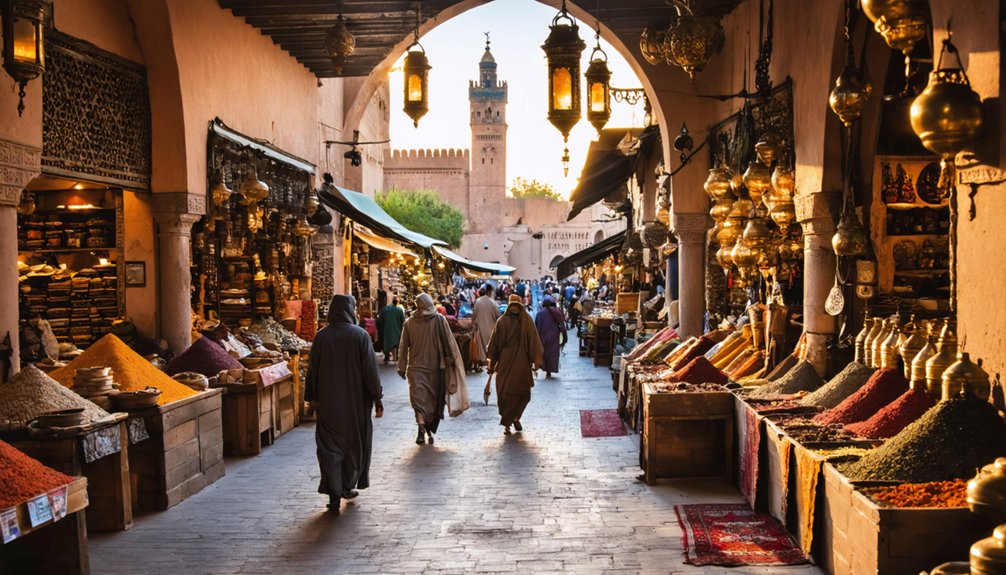

The best destinations for cultural exploration span Barcelona, Tajikistan, Oulu, Morocco, Kyoto, and Amsterdam. Barcelona stands out for UNESCO designer, while Tajikistan reveals Silk Road heritage through ancient corridors and Sogdian sites. Oulu offers Arctic creativity and contemporary festivals. Morocco excels through layered medinas, mosques, and imperial cities. Kyoto preserves ritual, tea culture, and historic districts. Amsterdam thrives on year-round festivals and civic life. A closer look shows which destination best matches different cultural interests.
Highlights
- Barcelona excels for cultural exploration through Gaudí’s UNESCO landmarks and Domènech i Montaner masterpieces that showcase early modern architecture and civic identity.
- Morocco offers layered urban culture, from Marrakech and Fez medinas to Casablanca’s Hassan II Mosque and Rabat’s blend of monuments and markets.
- Kyoto stands out for temples, shrines, tea ceremony, and seasonal rituals that preserve over a thousand years of living tradition.
- Tajikistan rewards history-focused travelers with Silk Road sites, Sogdian heritage, and the UNESCO Zarafshan-Karakum Corridor across varied landscapes.
- Choose destinations by matching heritage, festivals, accessibility, language comfort, and local etiquette preparation to your preferred level of cultural difference.
Barcelona for Architecture and Living History
Although many European cities preserve layers of history, Barcelona distinguishes itself through an extraordinary concentration of living architectural heritage, especially in the Catalan Modernista tradition. Its nine UNESCO landmarks create a coherent civic identity, inviting visitors to feel part of a culture shaped by artistic ambition, technical innovation, and public esteem. These nine landmarks are considered symbolic of the region’s unique cultural and heritage values.
Seven sites by Gaudí reveal a shifting vision across architecture, gardens, sculpture, and decorative arts, from Park Güell to the Sagrada Família crypt and façade. Collectively, they are recognized for Outstanding Universal Value as exceptional contributions to architecture, artistic exchange, and early-20th-century building typologies. Their daring forms include catenary arches, hyperbolic structures, and Gaudí mosa surfaces that altered building technology.
Complementing them, Domènech i Montaner finds expert expression in the Palau de la Música Catalana and Hospital de Sant Pau, where steel framing, light, gardens, and ornament unite beauty with function. Both are recognized as UNESCO masterpieces of Catalan Modernisme, noted for exceptional creative genius, authenticity, and early 20th-century architectural innovation. Together, these works embody Barcelona’s living history today.
Tajikistan for Silk Road Culture
Where many Silk Road narratives focus on imperial capitals, Tajikistan offers a more granular view of exchange through the communities of the Zarafshan Valley.
The UNESCO-listed Zarafshan‑Karakum Corridor, inscribed in 2023, links nine Tajik sites to a wider 886‑kilometer network, revealing how settlements, fortresses, and irrigation systems sustained connected life from the 6th to 12th centuries. Crossing seven geographical zones, the corridor also shows how highlands, plains, oases, and deserts shaped movement and cultural contact.
Ancient Penjikent anchors this experience with murals, fire temples, and artifacts that illuminate Sogdian Heritage and the practical rhythms of Silk Road society. Excavations also reveal two-story compounds arranged around central courtyards, highlighting the city’s sophisticated urban design. The nearby Rudaki History Museum adds context through exhibits on Sogdian culture and the legacy of the 9th-century poet Abu Abdullah Rudaki.
Nearby Mount Mugh Castle, Tali Khamtuda Fortress, and the Toksankoriz system demonstrate security and ingenuity, while Sarazm extends the region’s story back 5,000 years.
In modern Penjikent and Khujand, museums and bazaars help visitors feel welcomed into a living continuum of exchange, memory, and community.
Oulu for Arctic Culture and Creativity
Few northern cities translate Arctic identity into contemporary culture as effectively as Oulu, Finland’s fifth-largest city and European Capital of Culture for 2026. The city presents a confident northern identity through Sami influences, Arctic Art, clean local cuisine, and festivals that turn winter darkness into shared celebration. Signature events, from the Air Guitar World Championships to the Lumo Light Festival, reveal a community where creativity feels inclusive rather than exclusive. Oulu was also named to National Geographic’s 2026 list of top travel destinations for its blend of northern culture, nature, and creativity, reinforcing its status as a global travel pick. At the heart of daily local life, the historic Kauppahalli and Market Square offer cozy market culture through regional foods and enduring public traditions.
Cultural depth extends through Pikisaari’s wooden streets, the Oulu Museum of Art, castle ruins, and Market Square’s daily rhythms. Nature remains part of civic life, with nearby parks, Rokua Geopark, and Nallikari Beach framing year-round activity. Oulu’s strong sauna traditions, including distinctive venues like a floating sauna raft, add another authentic layer to its contemporary Arctic culture. Sauna Innovation and outdoor rituals further express how Oulu welcomes visitors into a living Arctic culture rooted in resilience, imagination, and belonging.
Morocco for Cities Packed With Culture
How can one country hold so many distinct urban worlds within such close reach? Morocco answers through cities that welcome travelers into shared memory and daily life.
In Casablanca, Hassan II Mosque rises above the Atlantic, while Casablanca art appears in Art Deco squares, museums, and the Habous Quarter. Visitors can also step inside the oceanfront mosque, one of the world’s largest mosques and one of the few in Morocco accessible to non-Muslims. As Morocco’s most cosmopolitan city, Casablanca also stands at a crossroads of cultures, where historic architecture and contemporary life meet.
Marrakech gathers people into its UNESCO medina, where Jemaa el‑Fna, Bahia Palace, and Ben Youssef Madrasa reveal layered civic identity. Beyond the city, Marrakech also serves as a gateway to Atlas day trips that connect culture with nearby Berber villages and mountain landscapes.
Fez deepens that sense of belonging through Fez heritage: a UNESCO medina of thousands of alleys, artisan workshops, tanneries, and enduring craftsmanship.
Meknes presents imperial ambition through vast gates, royal stables, and gardens shaped by Alaouite design.
Rabat balances fortress walls, landmark monuments, markets, and parks, showing how Moroccan culture remains both rooted and confidently open.
Kyoto for Rituals, Art, and Tradition
Seventeen UNESCO World Heritage Sites and more than a millennium as Japan’s imperial capital make Kyoto one of the clearest expressions of ritual, art, and continuity in urban life.
Temples, shrines, gardens, and historic districts preserve a civic identity shaped from 794 to 1868 and still felt in daily custom.
The city remains especially enthralling through Tea ceremony and Geisha apprenticeship.
As the birthplace of chanoyu, Kyoto offers disciplined encounters with matcha, etiquette, and history, often led by maiko in accessible English sessions. A 2020 survey of more than 450 international travelers found tea ceremony to be the most popular cultural experience among foreign visitors, ahead of cooking classes, geisha shows, and sumo wrestling.
In Gion’s machiya-lined streets, geiko and maiko embody refined performance traditions that connect visitors to a living cultural lineage.
Formal observances at shrines and temples, some tracing back a thousand years, deepen that sense of participation, inviting respectful travelers into practices that feel inherited rather than staged. The city’s ceremonial calendar remains vivid in the Aoi Matsuri, a May procession linking the Imperial Palace with the Kamo Shrines in a display of Heian-era pageantry. Another striking example is Gozan no Okuribi, the August bonfire rite in which giant fire characters are lit on Kyoto’s hills to send off ancestral spirits at the close of Obon.
Amsterdam for Festivals and Local Culture
Where Kyoto expresses cultural continuity through ritual and inherited forms, Amsterdam reveals local culture through a public calendar of festivals that spills across canals, parks, warehouses, and civic spaces.
Spring sets the tone with Kaboom Animation Festival, CineDans Fest, Tulp Festival, Opera Forward Festival, and DGTL at NDSM.
Summer intensifies participation through Holland Festival, Amsterdam Roots Festival, Kwaku Summer Festival, Grachtenfestival, and Amsterdam esteem, whose Canal esteem makes belonging visible on water.
The city’s festival festivals also span taste and sound: Rolling Kitchens, Bite of Amsterdam, Milkshake Festival, Red Light Jazz Festival, and Reggae Lake animate distinctive neighborhoods with unmistakable local vibes.
Even quieter gatherings, from Pluk de Nacht to Open Monumentendag, invite residents and visitors into a shared civic rhythm that feels open, confident, and distinctly Amsterdam.
How to Choose Your Cultural Destination
Choosing a cultural destination begins with a clear assessment of the traveler’s comfort with difference, since cultural similarity and cultural distance often shape destination appeal in distinct ways. Travelers from individualistic societies often favor familiar norms, while novelty seekers may prefer greater contrast; past travel experience and distance also influence that balance.
Sound selection also depends on practical cultural preparation. Research into customs, etiquette, cuisine, and everyday behavior helps avoid missteps and supports respectful connection. Language familiarity matters, yet language immersion can enhance confidence and belonging when supported by translation tools and basic phrase learning.
Destinations should then be judged by fit: museums, festivals, community encounters, heritage trails, and lesser-known sites. Strong infrastructure, accessibility, and visitor support ultimately determine whether cultural curiosity becomes meaningful participation.
References
- https://www.internationaltraveller.com/traveller/best-places-to-travel-2026/
- https://travellingdane.org/2025/12/31/cultural-destinations-2026/
- https://atlantavue.com/go-to-travel-destinations-for-2026/
- https://www.islands.com/2120188/ten-best-places-travel-2026/
- https://whc.unesco.org/en/list/804/
- https://www.barcelonaturisme.com/wv3/en/page/4713/destination-unesco.html
- https://whc.unesco.org/en/list/320/
- https://www.aluxurytravelblog.com/2018/08/13/barcelonas-9-unesco-world-heritage-sites/
- https://parkguell.barcelona/en/park-guell/world-heritage-site
- https://www.dailyartmagazine.com/exploring-antoni-gaudis-barcelona/